

Cart
0
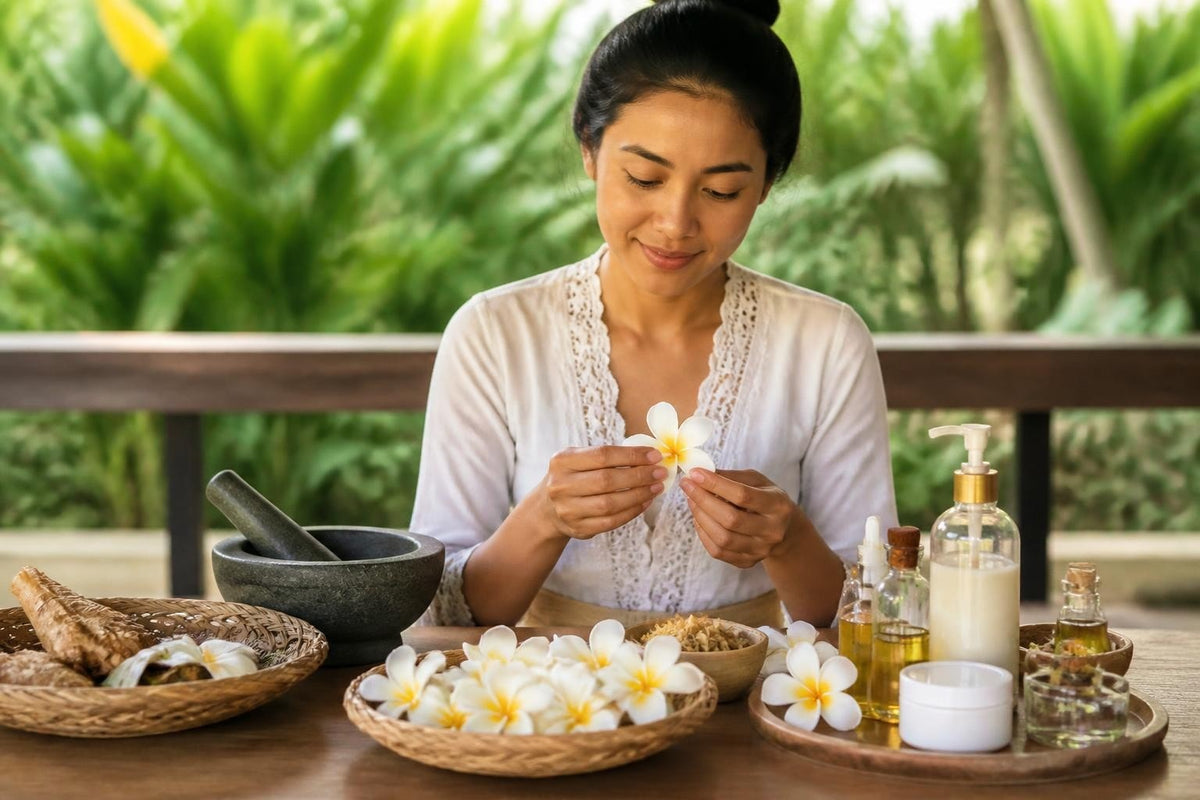
The first time I encountered frangipani was on a misty morning in Bali, where the flowers lay scattered across temple steps like tiny works of art. Their intoxicating fragrance wrapped around me, sweet yet subtle, and I understood immediately why this bloom has captivated cultures across the tropics for centuries. For those of us dedicated to natural bodycare, frangipani represents something more than beauty. It embodies the intersection of traditional botanical wisdom and modern sustainability, a living reminder that nature's most precious gifts often come from the communities who have protected them for generations.
The Story Behind the Scent
Frangipani, known scientifically as Plumeria, carries a name with romantic European origins despite its firmly tropical roots. The flower earned its common name from an Italian nobleman, Marquis Frangipani, who created a perfume in the 16th century. When Spanish explorers encountered the bloom in the Caribbean, its scent reminded them so strongly of that fragrance that the connection became permanent.
But the real story runs deeper than colonial naming conventions. Throughout Southeast Asia, the Pacific Islands, and Central America, frangipani has held sacred meaning for indigenous communities long before European contact. In Bali, you'll find these flowers adorning every temple offering, their five petals representing the Panca Maha Butha, the five great elements.
The National Tropical Botanical Garden documents extensive records of different Plumeria species, highlighting how various cultures have cultivated and cherished these plants. In Hawaiian tradition, frangipani (called plumeria locally) became so integral to lei-making that certain colors carried specific meanings: white for purity, pink for romance, red for passion.
Growing in Paradise
Understanding where frangipani thrives helps explain why it features so prominently in tropical bodycare traditions. These resilient trees love warmth, require minimal water once established, and produce abundant blooms without demanding constant attention. The Royal Horticultural Society's growing guide provides detailed cultivation advice, though most tropical communities have developed their own time-tested methods.
In Indonesia's coastal villages, frangipani trees grow alongside coconut palms, creating natural pharmacy gardens where women have harvested botanical ingredients for generations. This casual abundance makes the flower accessible, democratic even, available to anyone willing to learn its secrets.
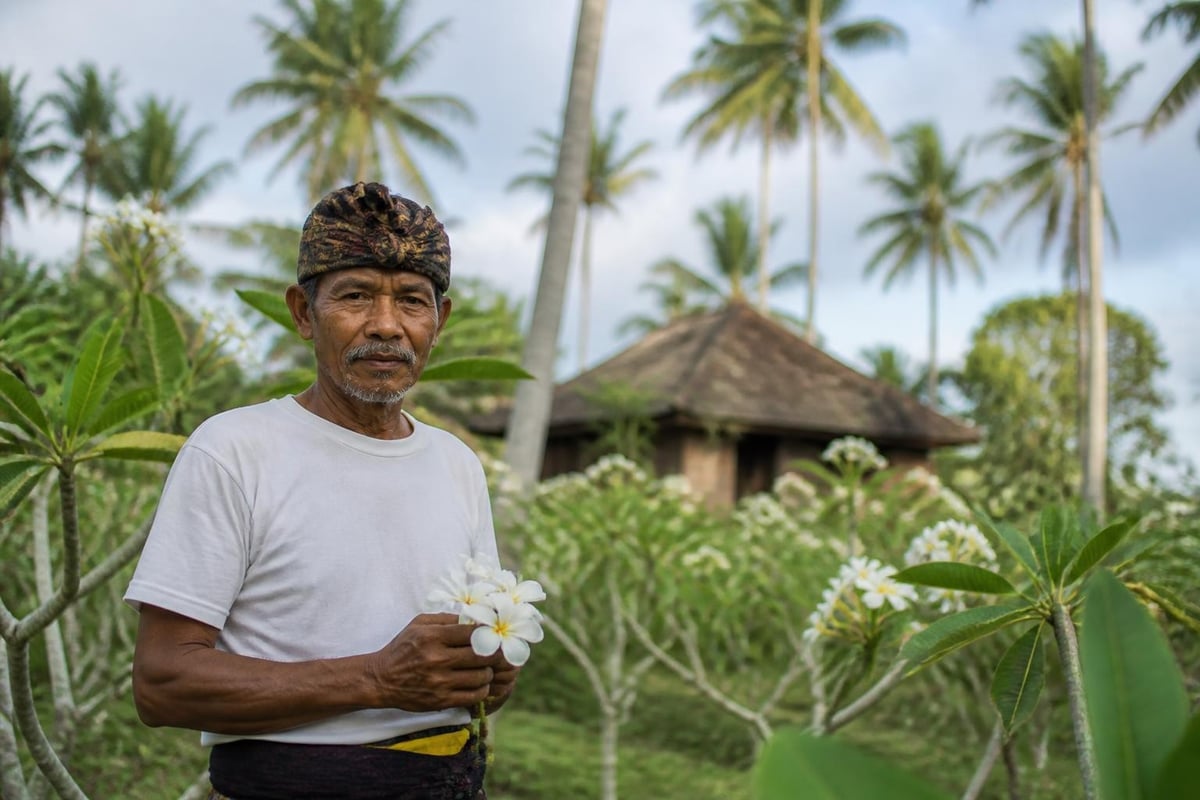
The growing requirements tell their own story:
- Sunlight: Full sun exposure for 6-8 hours daily
- Soil: Well-draining, slightly acidic to neutral pH
- Water: Drought-tolerant once established, minimal irrigation needed
- Temperature: Thrives in warm climates, sensitive to frost
- Propagation: Easily grown from cuttings, making sharing simple
According to research from the University of Florida's Gardening Solutions, frangipani adapts remarkably well to various subtropical conditions, which explains its spread across tropical and warm temperate regions worldwide. This adaptability has made it a bridge plant, connecting different cultures through shared appreciation.
The Science of Fragrance
What makes frangipani's scent so captivating? Recent scientific research has begun unraveling the complex chemistry behind that unforgettable aroma. A peer-reviewed study published in PMC analyzed the volatile compounds emitted by Plumeria rubra flowers, identifying specific enantiomeric compounds responsible for the signature fragrance profile.
The findings reveal something practitioners of traditional bodycare have always known intuitively: natural fragrance operates on a completely different level than synthetic approximations. Frangipani's scent contains dozens of aromatic molecules working in concert, creating depth and complexity that shifts throughout the day as different compounds volatilize at varying temperatures.
| Fragrance Component | Primary Note | Traditional Use |
|---|---|---|
| Linalool | Sweet, floral | Calming, stress relief |
| Benzyl Alcohol | Mild, pleasant | Mild preservative properties |
| Geraniol | Rose-like | Skin conditioning |
| Benzyl Benzoate | Faint, balsamic | Natural fixative |
This chemical complexity explains why frangipani has remained irreplaceable in natural perfumery and bodycare. At naturalē, we understand that working with whole botanical ingredients means honoring this complexity rather than trying to isolate single "active" compounds.
From Flower to Formula
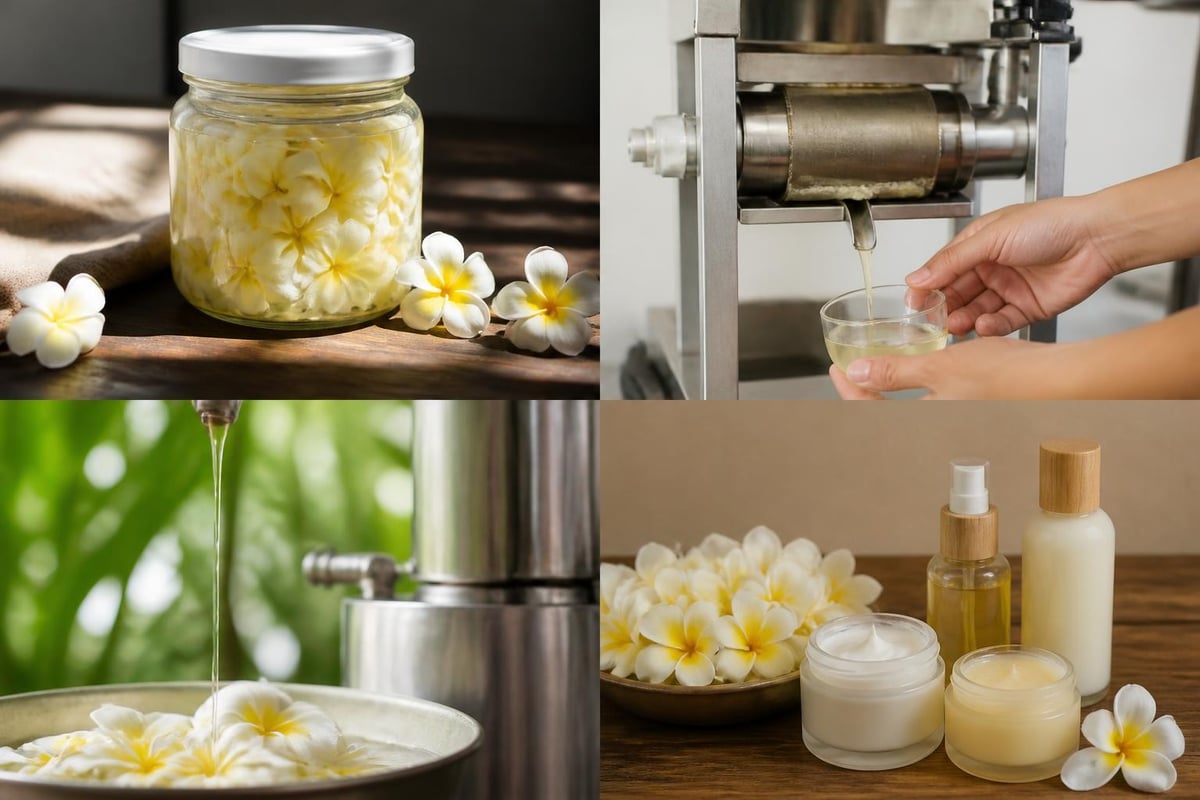
The journey from frangipani blossom to finished bodycare product requires knowledge, patience, and respect for traditional methods. In Indonesian coastal communities where naturalē works, women have perfected extraction techniques passed down through generations. These aren't industrial processes but careful handcrafting that preserves the flower's beneficial properties.
Traditional methods include:
- Solar infusion: Fresh flowers macerated in coconut oil under gentle sun exposure
- Cold pressing: Extracting essential oils without heat degradation
- Hydrosol distillation: Capturing water-soluble aromatic compounds
- Whole flower incorporation: Grinding dried petals into body scrub formulations
Each approach yields different benefits. Solar infusion creates richly scented oils perfect for body oil blends, while hydrosols provide gentle fragrance for lighter products. The choice depends on intended use and desired properties.
Cultural Significance and Sustainability
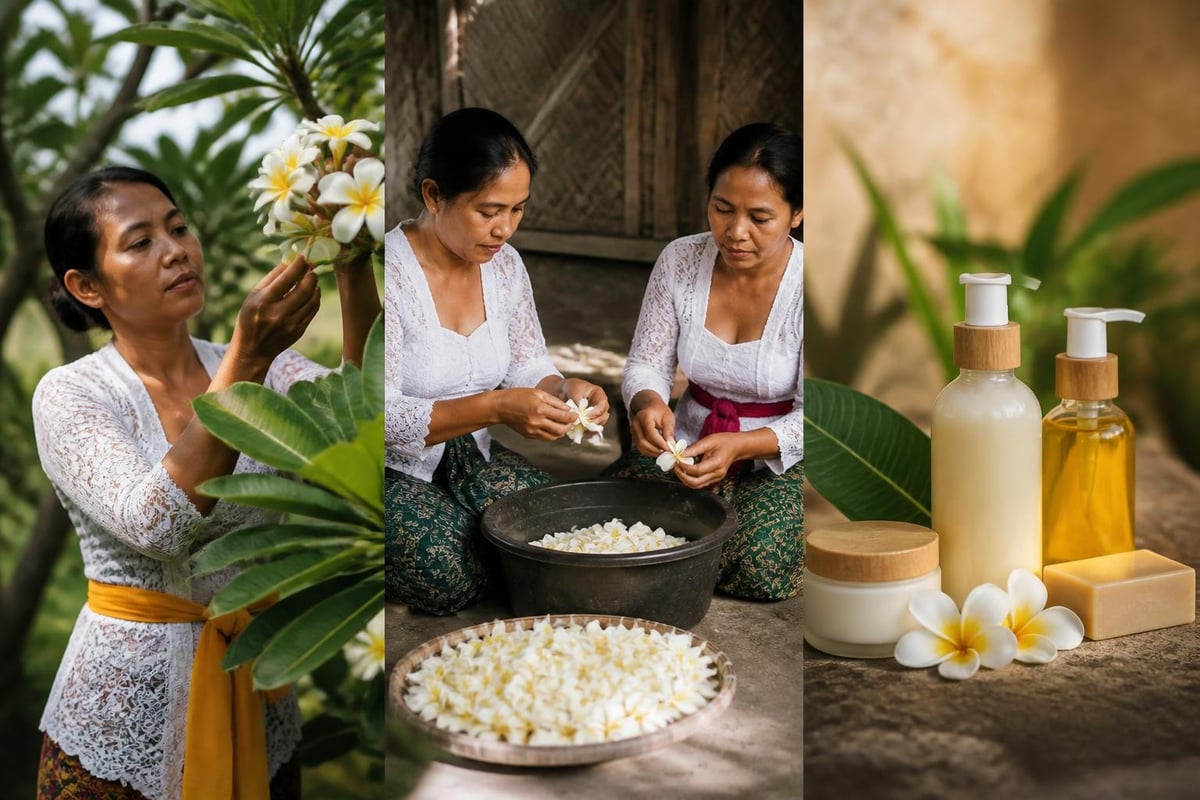
Walking through Balinese villages during ceremony preparations, you'll see women and children gathering frangipani flowers in the early morning hours. This practice connects generations, teaching botanical knowledge while creating offerings. But it also raises important sustainability questions: How do we honor traditional uses while meeting modern demand?
The answer lies in cultivation practices that support rather than exploit. Frangipani trees produce abundantly when healthy, and Plumeria rubra, one of the most common species, generates hundreds of flowers per tree during peak season. Sustainable harvesting means:
- Taking only fallen or easily accessible flowers
- Leaving adequate blooms for pollinators
- Rotating harvest locations
- Supporting local growers who maintain traditional orchards
- Avoiding wild collection in threatened ecosystems
At naturalē, our partnership with coastal communities ensures frangipani sourcing supports local economies without depleting natural resources. Women receive fair compensation for their botanical knowledge and harvesting work, creating economic incentives for conservation.
Beauty Benefits Beyond Fragrance
While frangipani's aroma captures immediate attention, the flower offers substantive skincare benefits that traditional practitioners have recognized for centuries. The petals contain compounds with natural emollient properties, making them valuable additions to moisturizing formulations.
Documented traditional uses include:
- Soothing sun-exposed skin
- Adding natural fragrance to handmade soap
- Creating aromatic bath infusions
- Softening rough areas like elbows and heels
- Enhancing meditation and relaxation practices
The connection between aromatherapy and skincare becomes inseparable with frangipani. When you apply a body butter scented with real frangipani infusion, you're experiencing both topical skin nourishment and the calming aromatic effects simultaneously.
Modern Applications of Ancient Wisdom
Today's natural bodycare movement represents a return to botanical foundations rather than innovation. What we call "trends" in 2026 often reflect rediscovery of traditional practices. Frangipani exemplifies this perfectly: an ingredient used for centuries finally receiving recognition in mainstream natural beauty.
The challenge and opportunity lie in scaling traditional methods without industrializing them beyond recognition. Small-batch production, like the approach taken at naturalē's coastal workshops, maintains quality and community connection. Each body serum or scented product carries traces of the hands that made it and the trees that produced its ingredients.
| Production Approach | Pros | Cons | Sustainability |
|---|---|---|---|
| Industrial extraction | High volume, consistent | Quality loss, community displacement | Low |
| Small-batch traditional | Quality preservation, fair wages | Limited scale | High |
| Cooperative model | Balance of scale and ethics | Requires coordination | Very High |
| Wild harvesting | Minimal processing | Sustainability concerns | Variable |
Creating Your Own Frangipani Ritual
You don't need to live in the tropics to incorporate frangipani into your natural bodycare routine. Whether working with fresh flowers, dried petals, or finished products, the key is approaching the ingredient with mindfulness and appreciation for its origins.
Simple frangipani self-care practices:
- Morning intention: Begin your day by inhaling frangipani-scented body oil, setting positive intentions
- Shower meditation: Use handmade soap with frangipani, focusing on the scent while releasing tension
- Evening wind-down: Apply frangipani-infused body butter using slow, deliberate massage strokes
- Bath ritual: If you have access to fresh flowers, float them in your bath water
- Gratitude practice: As you apply products, acknowledge the communities who cultivated and processed these ingredients
These practices transform routine skincare into meaningful self-care, connecting you to wider networks of traditional knowledge and sustainable production.
Choosing Authentic Frangipani Products
With growing interest in natural bodycare, frangipani has become commercially popular. Unfortunately, this means encountering many "frangipani" products containing only synthetic fragrance. Learning to identify authentic botanical ingredients protects both your skin and the communities who depend on genuine traditional crafts.
Red flags for synthetic substitution:
- Extremely strong, uniform fragrance that doesn't fade naturally
- Very low price point compared to artisan products
- No information about sourcing or production methods
- Ingredient lists featuring "fragrance" or "parfum" without specifics
- Lack of connection to origin communities or regions
Conversely, authentic frangipani products typically include detailed sourcing information, varying slightly between batches (a feature, not a flaw), and reasonable pricing that reflects fair compensation for producers. Brands like naturalē that emphasize transparency about sourcing demonstrate commitment to authentic ingredients.
The Indonesian Connection
Indonesia's relationship with frangipani runs particularly deep. Across the archipelago's thousands of islands, different communities have developed distinct uses and cultivation traditions. In Bali, the flower features in daily temple offerings. In coastal fishing villages, women have long infused the blooms into coconut oil for skin protection against sun and salt.
This diversity of traditional knowledge makes Indonesia a crucial center for authentic frangipani bodycare. When you choose products connected to Indonesian coastal communities, you're supporting preservation of both botanical diversity and cultural practices. The naturalē philosophy centers this connection, ensuring coastal women remain at the heart of production.
Working directly with these communities reveals layers of knowledge that formal research is only beginning to document. How certain harvesting times produce different aromatic profiles. Which companion plants enhance frangipani's beneficial properties. Methods for processing that maximize skin benefits while minimizing environmental impact.
Protecting Traditional Knowledge
As interest in natural ingredients grows globally, protecting traditional botanical knowledge becomes increasingly urgent. Frangipani represents just one example of plants whose uses have been refined over generations by specific communities. Ensuring these communities benefit from commercial applications of their knowledge isn't just ethical; it's essential for sustainability.
Key principles for ethical botanical sourcing:
- Direct partnerships with origin communities
- Fair compensation beyond commodity pricing
- Recognition of intellectual and cultural property
- Investment in local processing infrastructure
- Commitment to long-term relationships over extractive transactions
- Transparency about entire supply chain
These principles guide naturalē's work across Bali, Raja Ampat, and Togean, ensuring that growing demand for natural products strengthens rather than exploits coastal communities.
The future of frangipani in natural bodycare depends on maintaining these connections. As we seek botanical alternatives to synthetic ingredients, we must ensure our choices support the people and ecosystems that make authentic products possible. Every purchase becomes a vote for either extraction or partnership, synthetic substitution or genuine tradition.
Frangipani offers us more than beautiful fragrance and skin-nourishing properties. It provides a tangible connection to traditional botanical wisdom and the communities who have protected these practices across generations. By choosing authentic, sustainably sourced frangipani products, you participate in preserving both cultural knowledge and coastal ecosystems. At naturalē, we invite you to experience the difference of genuine handcrafted bodycare rooted in Indonesian traditions, where every product tells a story of community empowerment and environmental stewardship.


