

Cart
0
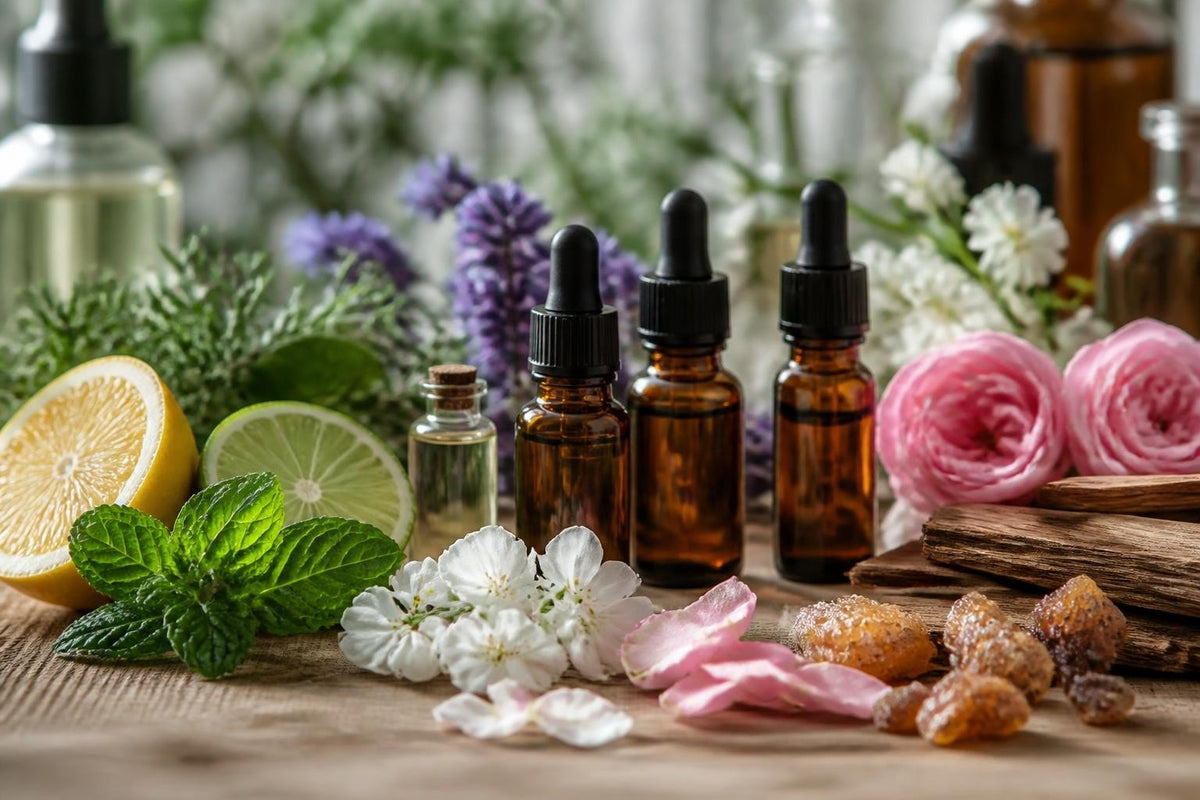
The ancient art of perfumery has found new life in 2026, as more people turn away from synthetic fragrances and embrace the pure, plant-based alternatives our ancestors knew well. I remember the first time I truly understood the power of essential oil perfume. It was during a visit to a small cooperative in Bali, where women were carefully blending ylang-ylang with sandalwood and a hint of citrus. The fragrance wasn't just pleasant, it told a story of the island, the soil, the hands that harvested each bloom. That moment changed how I thought about what we wear on our skin. Unlike conventional perfumes that rely on synthetic chemicals and alcohol bases, essential oil perfume connects us directly to the earth, offering not just scent but the concentrated essence of living plants.
The Foundation of Natural Fragrance Creation
Creating an essential oil perfume begins with understanding the fundamental chemistry behind these precious botanical extracts. Essential oils are volatile organic compounds extracted from flowers, leaves, bark, roots, and resins through distillation or cold-pressing methods. Each drop contains hundreds of molecular constituents that work together to create complex aromatic profiles.
The fundamental chemistry of essential oils reveals why these natural ingredients behave so differently from synthetic fragrances. Terpenes, esters, aldehydes, and phenols dance together in proportions that nature perfected over millennia. When you blend these oils, you're not just mixing scents but creating new chemical conversations.
Building Your Perfume Pyramid
Every well-crafted essential oil perfume follows the classic three-note structure:
Top Notes (the first impression)
- Citrus oils like bergamot, lemon, and grapefruit
- Light herbs such as basil and mint
- Evaporate within 15-30 minutes
- Make up 10-20% of your blend
Heart Notes (the emotional center)
- Floral essences: rose, jasmine, ylang-ylang
- Spices like cardamom and cinnamon
- Last 2-4 hours
- Comprise 40-60% of your formula
Base Notes (the lasting foundation)
- Woods: sandalwood, cedarwood, vetiver
- Resins: frankincense, myrrh
- Vanilla and patchouli
- Linger 6+ hours
- Form 20-30% of your blend
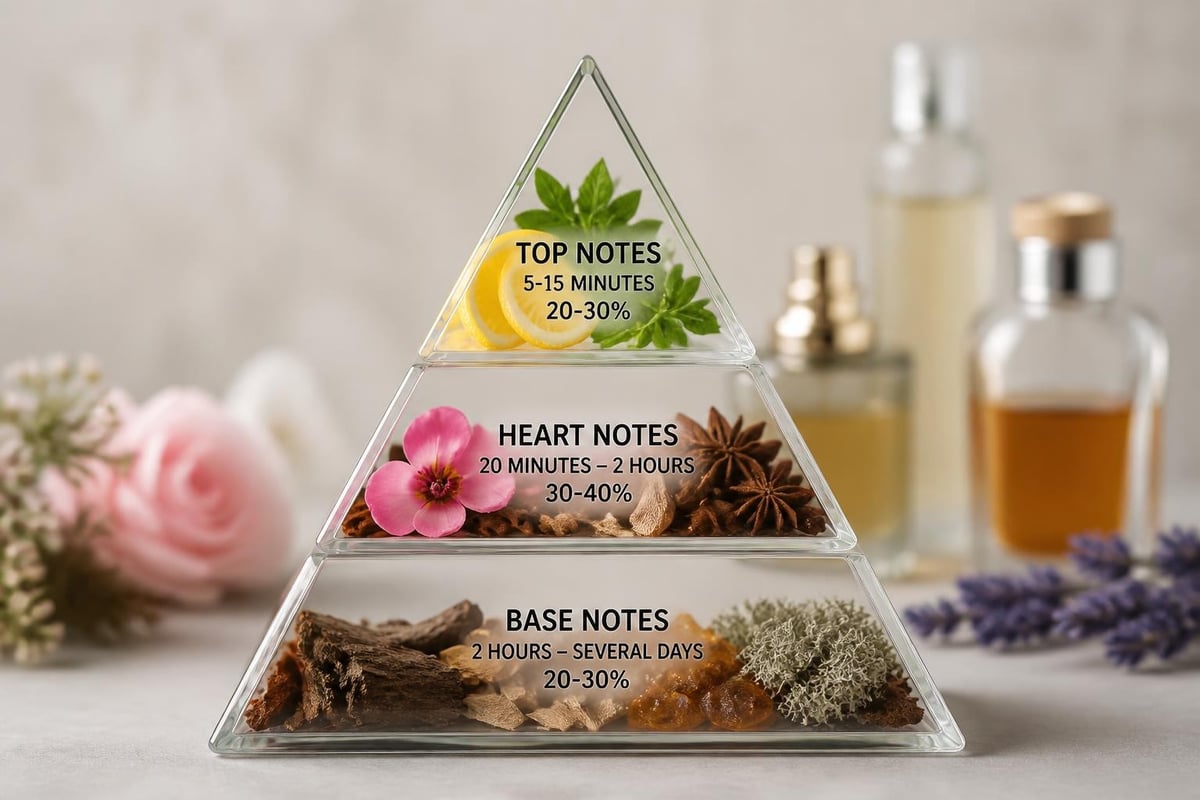
This structure isn't arbitrary. As the neurobiology of fragrance perception demonstrates, our olfactory system processes scents in waves, with lighter molecules reaching our receptors first, followed by progressively heavier compounds that anchor the experience.
Sourcing Ingredients with Integrity
The quality of your essential oil perfume depends entirely on the purity and origin of your ingredients. In Indonesia's coastal communities, where naturalē works, this connection between source and bottle remains visible and tangible. Women harvest coconuts at dawn, process them using traditional methods, and ensure nothing goes to waste.
When sourcing essential oils for perfumery, consider these critical factors:
- Botanical certification and traceability: Know the exact species (Latin name) and origin
- Extraction method: Steam distillation, CO2 extraction, or cold-pressing
- Testing documentation: GC-MS analysis reports confirming purity
- Sustainability credentials: Fair trade, organic, or FairWild certification
- Harvest timing: Oils extracted at peak potency
The Geneva Environment Network's guidance on medicinal and aromatic plants offers valuable frameworks for ethical sourcing. These standards protect both plant populations and the communities who depend on them.
| Sourcing Factor | Why It Matters | What to Look For |
|---|---|---|
| Geographic Origin | Terroir affects chemistry | Single-origin verification |
| Harvest Season | Impacts oil concentration | Seasonal batch dates |
| Processing Time | Freshness preserves volatile compounds | Distillation within 24 hours of harvest |
| Community Impact | Ensures fair wages | Direct trade relationships |
Our handcrafted products at naturalē exemplify this sourcing philosophy. Every ingredient can be traced back to specific coastal communities where traditional knowledge guides sustainable harvesting practices.
Blending Techniques and Formulation Basics
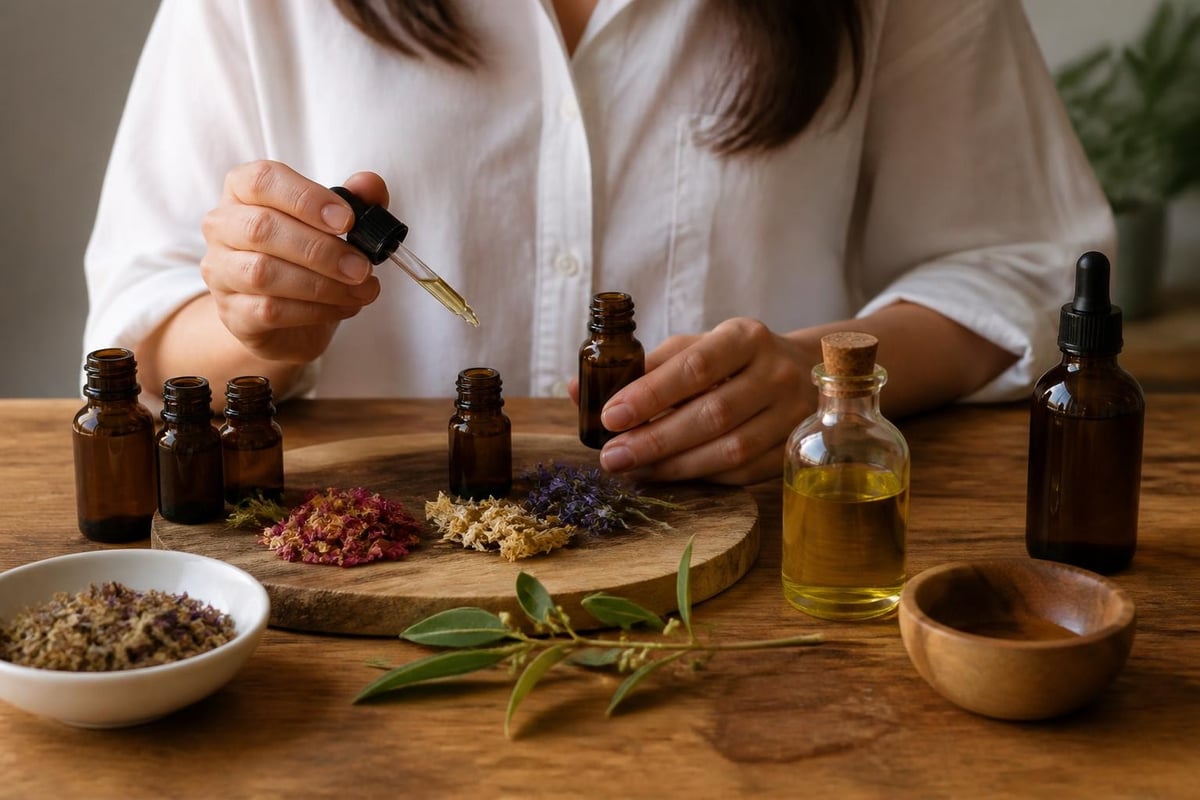
Creating your first essential oil perfume feels like conducting an orchestra. Each oil plays its part, and the magic happens in how they harmonize together. Start small, work methodically, and keep detailed records of every experiment.
The Dilution Question
Pure essential oils are too concentrated for direct skin application. Professional perfumers typically dilute their blends in a carrier:
- Jojoba oil: Odorless, stable, closely mimics skin sebum
- Fractionated coconut oil: Light, non-greasy, excellent for roll-on perfumes
- Organic alcohol: Creates spray perfumes, though less common in natural formulations
A standard dilution for essential oil perfume runs between 15-30% essential oils to carrier, though solid perfumes may go higher.
Your First Blend: A Simple Recipe
Let me walk you through a beginner-friendly essential oil perfume that captures tropical warmth:
Ingredients:
- 3 drops bergamot (top note)
- 2 drops lemon (top note)
- 8 drops ylang-ylang (heart note)
- 5 drops jasmine absolute (heart note)
- 6 drops sandalwood (base note)
- 4 drops vanilla oleoresin (base note)
- 10ml jojoba oil (carrier)
Method:
- Add base notes to your glass bottle first
- Layer in heart notes, swirling gently
- Finish with top notes
- Add carrier oil
- Cap tightly and let macerate for 48 hours minimum
- Age for 2-4 weeks for full development
The aging process allows the aromatic molecules to marry and mellow. What smells sharp initially softens into rounded complexity.
Safety, Regulations, and Best Practices
Natural doesn't automatically mean safe. Essential oils are highly concentrated plant medicines that demand respect and understanding. The IFRA Standards provide crucial safety guidance for fragrance use, including maximum usage levels for different essential oils.
Understanding Dermal Limits
Some essential oils have strict dermal maximum limits:
- Bergamot: Contains bergapten (phototoxic); use bergapten-free versions or stay under 0.4%
- Cinnamon bark: Maximum 0.05% in leave-on products due to sensitization risk
- Clove bud: Limited to 0.5% to prevent skin irritation
For those creating products for sale within the EU, fragrance allergen labelling requirements mandate disclosure of 26 specific allergens when they exceed certain thresholds. Even natural essential oil perfume falls under these consumer protection regulations.
Patch Testing Protocol
Before wearing any new essential oil perfume:
- Dilute one drop in a teaspoon of carrier oil
- Apply to inner forearm
- Cover with bandage
- Wait 24-48 hours
- Check for redness, itching, or irritation
Pregnancy, nursing, and certain medical conditions require extra caution. Some oils are contraindicated for children under specific ages.
Preserving Quality and Extending Shelf Life
Your beautiful essential oil perfume deserves proper care to maintain its aromatic integrity. Unlike synthetic fragrances stabilized with preservatives, natural perfumes face oxidation, photodegradation, and microbial challenges.
Storage Best Practices:
- Dark amber or cobalt blue glass bottles (never plastic)
- Cool, dry location away from sunlight
- Tight-fitting caps to prevent evaporation
- Separate storage from heat sources
- Refrigeration for citrus-heavy blends
Different essential oils age differently. While citrus oils oxidize quickly (6-12 months shelf life), base notes like sandalwood and patchouli actually improve with age, developing richer, more complex profiles over years.
Our body care collection demonstrates how traditional preservation methods, from proper packaging to mindful formulation, extend product life naturally without synthetic preservatives.
Advanced Techniques: Enfleurage and Tinctures
Beyond simple blending, traditional perfumery offers techniques that extract fragrances impossible to capture through distillation. Though time-intensive, these methods create essential oil perfume of extraordinary depth.
Cold Enfleurage for Delicate Florals
Jasmine, tuberose, and gardenia are too delicate for steam distillation. Enfleurage, practiced since ancient Egypt, captures their ethereal beauty:
The process involves spreading odorless fat (traditionally lard, today more often coconut oil) on glass plates, pressing fresh flowers into the fat, and replacing the blooms daily for weeks until the fat becomes saturated with fragrance. The resulting "pomade" is then washed with alcohol to extract the absolute.
Creating Botanical Tinctures
Tinctures extend your palette beyond steam-distilled oils. Resins, vanilla beans, tonka beans, and certain flowers tincture beautifully in high-proof organic alcohol:
- Fill a glass jar 1/3 full with botanical material
- Cover completely with 95% organic alcohol
- Seal tightly and store in a dark place
- Shake daily for 2-6 weeks
- Strain through coffee filter
These tinctures add fixative properties and unique notes unavailable in essential oil form.
The Indonesian Aromatic Heritage
Indonesia's archipelago offers one of the world's most diverse essential oil palettes. From the ylang-ylang plantations of Java to the patchouli fields of Sumatra, the nutmeg groves of Maluku to the vetiver of Bali, this region has shaped global perfumery for centuries.
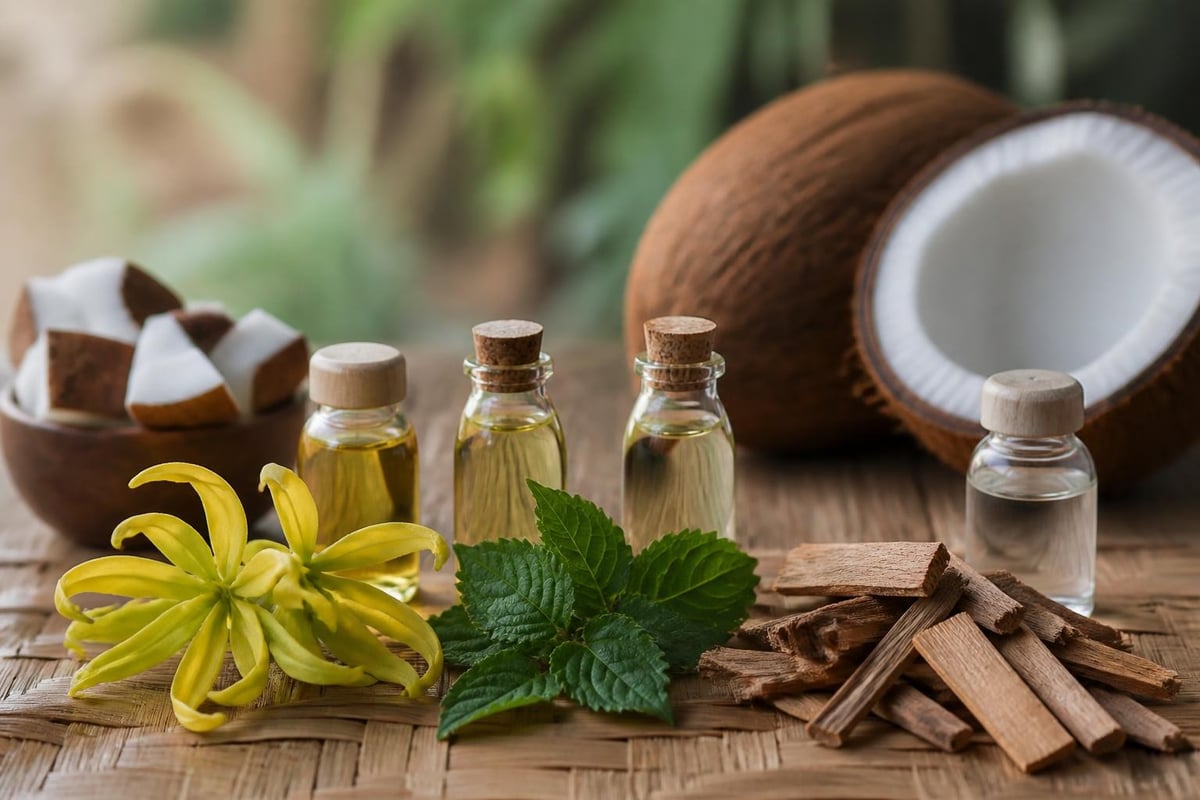
What makes Indonesian essential oils special extends beyond their aromatic profiles. The traditional craftsmanship and community-centered production models here demonstrate how essential oil perfume can support livelihoods while protecting ecosystems.
Key Indonesian Oils for Natural Perfumery:
| Essential Oil | Primary Region | Aromatic Profile | Perfume Role |
|---|---|---|---|
| Ylang-Ylang | Java | Sweet, floral, slightly fruity | Heart note, narcotic floral |
| Patchouli | Sumatra | Earthy, woody, slightly sweet | Base note, fixative |
| Vetiver | Bali | Smoky, woody, green | Base note, grounding |
| Nutmeg | Maluku | Warm, spicy, slightly sweet | Heart note, exotic accent |
| Clove | Maluku | Warm, spicy, slightly medicinal | Heart note, depth |
The cooperative model that naturalē embodies shows how essential oil perfume production can empower local women, preserve traditional knowledge, and create economic opportunity without exploitation. Visit our story page to understand how this works in practice across Bali, Raja Ampat, and Togean communities.
Matching Perfume to Purpose and Personality
Essential oil perfume serves purposes beyond pleasant scent. The aromatherapeutic properties of these botanical essences affect mood, energy, and wellbeing in measurable ways. Creating intentional blends for specific needs transforms perfume from vanity to self-care.
Energizing Morning Blends
Start your day with bright, uplifting citrus and mint:
- 4 drops grapefruit
- 3 drops peppermint
- 2 drops rosemary
- 6 drops bergamot
- 5 drops ginger
This combination supports alertness, mental clarity, and positive mood.
Calming Evening Formulas
Wind down with gentle florals and grounding woods:
- 6 drops lavender
- 4 drops Roman chamomile
- 3 drops frankincense
- 5 drops sandalwood
- 2 drops vetiver
These oils promote relaxation, reduce stress hormones, and support sleep quality.
Confidence and Focus Blends
For important meetings or creative work:
- 5 drops cedarwood
- 4 drops rosemary
- 3 drops basil
- 4 drops cypress
- 4 drops black pepper
The combination enhances concentration while providing grounded confidence.
Seasonal Considerations in Perfume Wearing
Your essential oil perfume should evolve with the seasons. Heat amplifies fragrance projection, while cold weather requires heavier, more persistent blends.
Summer Strategy: Light, fresh compositions with prominent top notes. Citrus, mint, and green herbs suit humid weather. Lower dilution rates (15-20%) prevent overwhelming intensity.
Winter Approach: Rich, resinous blends with substantial base notes. Incense, woods, and warming spices create comfort. Higher dilution rates (25-30%) ensure adequate projection in cold air.
The wellness products we create at naturalē consider Indonesia's tropical climate, where lighter, refreshing formulations work year-round, though customers in temperate climates may want seasonal variation.
Quality Control and Authentication
As essential oils as natural sources of fragrance grow more popular, adulteration becomes a serious concern. Unscrupulous suppliers dilute pure oils with synthetics or cheaper botanicals, compromising both aroma and therapeutic value.
Recognizing Quality Indicators
Physical Assessment:
- Viscosity appropriate to oil type
- Color consistency across batches
- Clean, true-to-plant aroma without chemical notes
- Proper evaporation rate
Documentation Review:
- Batch-specific GC-MS reports
- Latin botanical name
- Part of plant used
- Country of origin
- Extraction method
- Organic or wild-crafted certification
The EPA's Safer Choice fragrance criteria offers valuable guidance on evaluating fragrance ingredient safety, even for natural formulations.
Working with Trusted Suppliers
Building relationships with reputable essential oil suppliers transforms your perfumery practice. Ask questions. Request samples. Visit facilities when possible. The transparency we practice at naturalē regarding ingredient sourcing and production methods should be standard industry-wide.
Sustainable Packaging and Presentation
Your essential oil perfume deserves packaging that reflects its natural origins and environmental values. The container affects not just aesthetics but also fragrance preservation and user experience.
Eco-Conscious Options:
- Recycled glass bottles with sustainable cork stoppers
- Bamboo roll-on containers
- Refillable atomizers
- Minimal, recyclable outer packaging
- Natural fiber pouches instead of boxes
Our approach to sustainable packaging demonstrates how thoughtful design minimizes waste while protecting product integrity. Every choice, from bottle selection to label adhesive, impacts environmental footprint.
Consider solid perfume as an alternative format. Beeswax and plant butters create portable, spill-proof perfumes with zero packaging waste beyond a small tin.
Building Your Personal Scent Library
Developing expertise in essential oil perfume requires building a collection thoughtfully over time. Rather than purchasing dozens of oils at once, start with versatile foundations and expand gradually.
Essential Starter Kit (10 oils):
- Lavender (versatile, calming)
- Bergamot (bright, uplifting)
- Sandalwood (grounding, fixative)
- Ylang-ylang (sweet, floral)
- Patchouli (earthy, fixative)
- Frankincense (resinous, spiritual)
- Lemon (fresh, cheerful)
- Cedarwood (woody, affordable base)
- Rose absolute (precious, heart note)
- Vanilla oleoresin (sweet, comforting)
These ten oils enable hundreds of blend combinations, from fresh to oriental, simple to complex. As you gain confidence, add specialty oils that call to your creative vision.
Document everything. Maintain a perfume journal recording:
- Exact formulations and ratios
- Maturation observations
- Wear testing notes
- Compliments received
- Personal reactions
- Reformulation ideas
This archive becomes invaluable as your skills develop, allowing you to refine successful blends and learn from less successful experiments.
Sharing Your Creations Responsibly
Once you've created essential oil perfume blends you love, you may want to share them with friends or even sell them. This transition from hobby to enterprise requires understanding regulatory requirements and liability considerations.
The IFRA guidance for applying standards provides crucial information for anyone moving beyond personal use. Even small-scale makers must ensure their formulations meet safety standards, particularly regarding allergen disclosure and dermal limits.
Legal Essentials:
- Product liability insurance
- Proper labeling with ingredient lists
- Allergen disclosure
- Batch tracking systems
- Good Manufacturing Practice (GMP) adherence
- Local business licensing
Community craft markets and online platforms make sharing your essential oil perfume creations accessible, but don't skip the foundational legal work. Protecting both your customers and your business matters.
The journey into essential oil perfume blends ancient wisdom with modern creativity, offering endless opportunities for self-expression while connecting us to plant traditions spanning millennia. Whether you're crafting personal signature scents or exploring aromatherapy's wellbeing benefits, natural perfumery rewards patience, practice, and respect for the botanical world. At naturalē, we honor these same principles in everything we create, partnering with Indonesia's coastal communities to bring you handcrafted products that celebrate natural ingredients, traditional methods, and sustainable practices that protect both people and planet for generations to come.


