

Cart
0

The sun was just beginning to rise over the Indonesian coastline when I first learned about the power of nature's most celebrated ingredient. A local artisan showed me how generations of coastal communities had harnessed botanical sources of brightening compounds, long before modern skincare made them famous. That moment sparked a journey into understanding organic vitamin c, not just as a trendy ingredient, but as a bridge between traditional wisdom and contemporary wellness. Today, as consumers increasingly demand transparency and sustainability in their bodycare products, this powerful antioxidant stands at the intersection of efficacy and ethical sourcing.
The Science Behind Nature's Brightening Champion
Organic vitamin c has earned its reputation through decades of research and real-world results. Unlike synthetic alternatives, organically sourced ascorbic acid comes from whole-plant extracts that naturally contain supporting compounds like bioflavonoids and polyphenols. These co-factors work synergistically to enhance absorption and stability.
When you apply organic vitamin c topically, it penetrates the skin's outer layers and triggers a cascade of beneficial reactions. The molecule acts as a potent antioxidant, neutralizing free radicals generated by UV exposure, pollution, and everyday stress. Clinical evidence shows significant effects on anti-glycation, antioxidation, and skin-brightening when applied consistently.
How Plant-Derived Sources Differ
The distinction between organic and conventional vitamin c goes deeper than certification labels. Organically grown source materials like camu camu, acerola cherries, and kakadu plum are cultivated without synthetic pesticides or chemical fertilizers. This matters because:
- Cleaner extraction processes preserve the vitamin's delicate structure
- Higher concentrations of complementary phytonutrients
- Reduced environmental impact from farm to finished product
- Support for regenerative agriculture practices
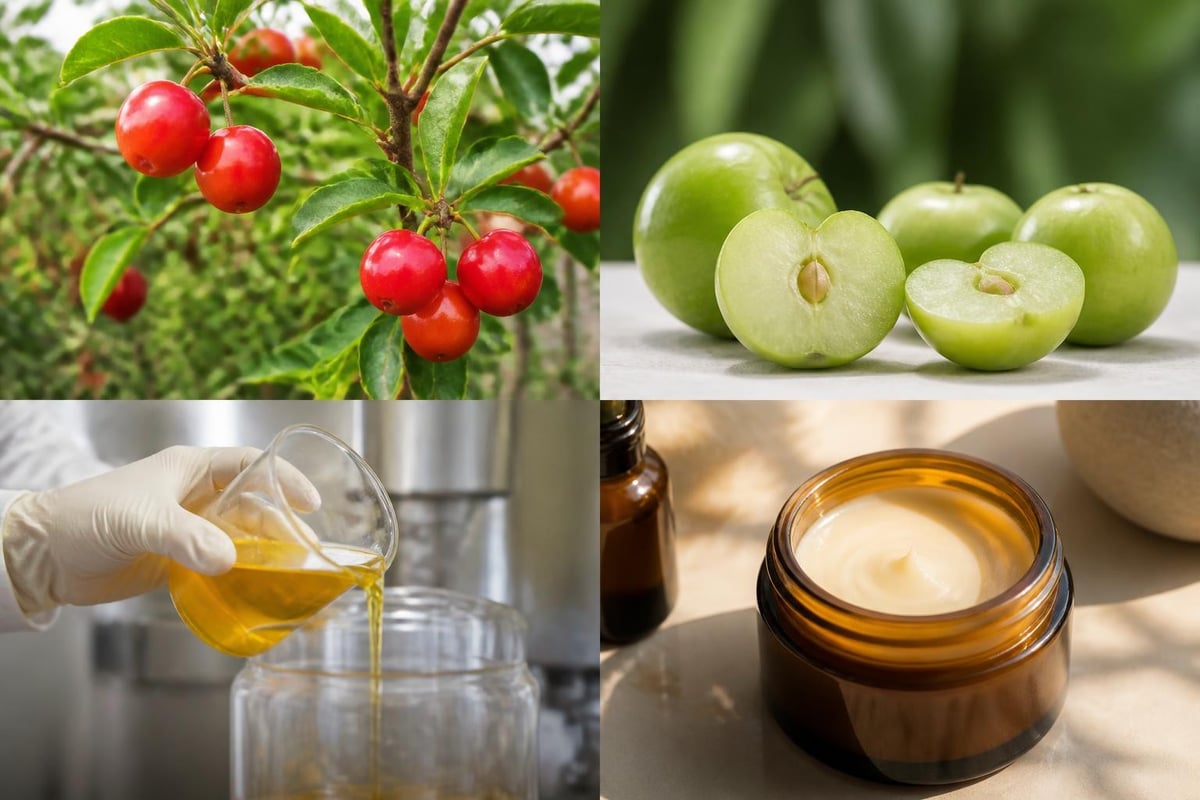
The agricultural standards governing organic vitamin c production ensure soil health, biodiversity, and ecosystem balance. When artisans in coastal communities harvest ingredients using traditional methods, they're participating in a circular economy that honors both land and people. This philosophy aligns perfectly with the values many natural bodycare enthusiasts hold dear.
Formulation Challenges and Innovation
Creating effective products with organic vitamin c requires both art and science. The ingredient's notorious instability has challenged formulators for years. Ascorbic acid oxidizes rapidly when exposed to light, air, and water, turning from clear to brown and losing potency. This is where traditional craftsmanship meets modern innovation.
| Challenge | Traditional Solution | Modern Approach |
|---|---|---|
| Oxidation | Dark glass containers | Airless packaging + antioxidants |
| pH sensitivity | Balanced botanical blends | Buffered formulations |
| Skin irritation | Lower concentrations | Derivative forms (MAP, SAP) |
| Stability | Fresh, small batches | Advanced delivery systems |
Different vitamin C derivatives offer varying levels of stability and skin penetration. Magnesium ascorbyl phosphate (MAP) and sodium ascorbyl phosphate (SAP) are water-soluble derivatives that remain stable at higher pH levels, making them gentler for sensitive skin types common in tropical climates.
The Role of Complementary Ingredients
Organic vitamin c performs best when formulated with supporting players. In handcrafted products from Indonesia's coastal regions, you'll often find it paired with:
- Virgin coconut oil for deep moisturization and enhanced absorption
- Natural vitamin E from plant oils to stabilize and extend shelf life
- Ferulic acid from rice bran to multiply antioxidant benefits
- Aloe vera for soothing properties and hydration
These combinations aren't random. They reflect generations of knowledge about which ingredients work harmoniously. At naturalē, traditional formulation wisdom guides every product decision, ensuring each ingredient serves multiple purposes while maintaining organic integrity.
Sourcing Sustainability and Community Impact
Behind every bottle of organic vitamin c lies a complex supply chain. The difference between conventional and ethical sourcing becomes clear when you trace ingredients back to their origins. In Indonesia's coastal communities, women artisans cultivate relationships with small-scale farmers who grow ingredient crops using ancestral techniques.
The USDA's organic regulations govern how vitamin C can be used in organic products, ensuring transparency throughout production. These standards protect both consumers and the environment, prohibiting synthetic additives while encouraging biodiversity.
Economic Empowerment Through Ingredients
When brands prioritize organic vitamin c from fair-trade sources, they create ripple effects far beyond skincare. Small farming cooperatives gain stable income, enabling investment in education, healthcare, and infrastructure. Women who traditionally held knowledge about medicinal plants become valued partners rather than invisible labor.
This model transforms ingredient sourcing from transactional to relational. Our philosophy centers on honoring these connections, recognizing that truly natural bodycare cannot exist separate from the communities and ecosystems that produce it.

Practical Applications in Daily Skincare
Understanding organic vitamin c means knowing how to use it effectively. The American Academy of Dermatology recommends vitamin C serums as part of a comprehensive approach to reducing photoaging and dark spots, particularly when combined with sun protection.
For tropical climates with intense sun exposure, incorporating this brightening ingredient into your morning routine offers protective benefits throughout the day. Here's how to maximize results:
Morning Application:
- Cleanse with gentle, natural soap to remove overnight oils
- Apply organic vitamin c serum to damp skin
- Follow with coconut face cream for hydration
- Finish with mineral-based sun protection
Evening Enhancement:
- Remove makeup and pollution with body oil cleansing
- Tone with rosewater or hydrosol
- Apply organic vitamin c treatment
- Seal with nourishing body butter
Beyond Facial Care
While organic vitamin c shines in facial serums, its benefits extend throughout bodycare. Handcrafted products like body scrubs can incorporate brightening botanicals rich in natural ascorbic acid. Even handmade natural soap formulated with citrus extracts delivers gentle exfoliation and antioxidant protection.
The key is consistency rather than concentration. Lower percentages used daily often outperform occasional high-dose treatments, especially when products are freshly crafted in small batches to ensure potency.
The Future of Clean Ingredient Innovation
As we move deeper into 2026, the demand for organic vitamin c continues growing. Consumers increasingly question not just what ingredients do, but where they come from and who benefits from their production. This shift represents a fundamental change in how we think about beauty and wellness.
Recent systematic reviews of clinical applications in dermatology confirm what traditional practitioners have long known: natural sources of vitamin C offer validated benefits when properly formulated and consistently applied. The science now supports the stories.
Innovations on the Horizon
Emerging extraction techniques promise even better stability and bioavailability while maintaining organic integrity:
- Fermentation technology using beneficial bacteria to concentrate vitamin C from plant sources
- Encapsulation methods protecting delicate molecules until skin contact
- Upcycled ingredient streams harvesting vitamin C from food production byproducts
- Bioregional sourcing matching ingredients to local ecosystems and traditional knowledge
These advances don't replace traditional craftsmanship but enhance it. When artisans combine ancestral formulation knowledge with modern stability testing, they create products that honor both heritage and effectiveness.
Navigating Labels and Certifications
Not all products claiming organic vitamin c deliver on their promises. Understanding certifications helps consumers make informed choices aligned with their values. Look for these markers of authenticity:
| Certification | What It Means | Why It Matters |
|---|---|---|
| USDA Organic | 95%+ organic ingredients | Verified farming practices |
| Fair Trade | Ethical sourcing standards | Community benefit guarantees |
| B Corp | Social/environmental performance | Holistic business accountability |
| Leaping Bunny | No animal testing | Cruelty-free verification |
Beyond official certifications, transparency matters. Brands that share their sourcing story and ingredient origins demonstrate commitment to accountability. When companies list specific botanical sources rather than generic "vitamin C," they're inviting scrutiny and building trust.
Reading Between the Lines
Marketing language often obscures reality. "Natural" doesn't automatically mean organic or sustainable. "Vitamin C" on a label might indicate synthetic ascorbic acid derived from corn starch rather than plant extracts. Questions to ask include:
- What specific plants provide the vitamin C?
- How are those plants grown and harvested?
- Who processes the raw materials?
- How fresh is the final product?
Companies committed to authentic organic vitamin c willingly answer these questions. Those using conventional sources often hide behind vague terminology.

Integration with Traditional Practices
Long before modern skincare isolated individual compounds, traditional beauty rituals incorporated whole botanical sources of vitamin C. Indonesian coastal communities used citrus peels, tropical fruits, and specific flowers in bathing preparations and skin treatments. This holistic approach delivered multiple benefits simultaneously.
Contemporary formulations can learn from these practices. Rather than adding isolated organic vitamin c to otherwise conventional products, truly natural bodycare integrates vitamin-rich botanicals into synergistic blends. Body wash crafted with citrus essential oils, for example, provides gentle brightening alongside aromatherapeutic benefits.
The wisdom lies in understanding plants as complete packages rather than mere delivery systems for single compounds. When you use face oil containing rosehip seed or sea buckthorn, you're getting organic vitamin c plus essential fatty acids, carotenoids, and other beneficial compounds nature designed to work together.
Environmental Considerations in Production
The environmental footprint of organic vitamin c extends from field to finished product. Sustainable production methods consider water usage, energy inputs, packaging materials, and transportation emissions. Small-batch, locally-produced bodycare naturally minimizes many of these impacts.
When ingredient cultivation happens near manufacturing facilities, transportation emissions decrease dramatically. When production uses renewable energy and minimizes water waste, the carbon footprint shrinks further. These considerations matter as much as organic certification in determining true sustainability.
Packaging choices also influence environmental impact. Glass containers protect organic vitamin c from light-induced degradation while remaining infinitely recyclable. Upcycled materials for secondary packaging demonstrate commitment to circular economy principles. Even seemingly small choices like eliminating unnecessary outer boxes add up across thousands of units.
Making the Switch to Organic Formulations
Transitioning to products featuring organic vitamin c doesn't require overhauling your entire routine overnight. Start with one product and observe how your skin responds. Many people notice initial improvements within two to three weeks, with cumulative benefits building over months of consistent use.
Your skin might experience a brief adjustment period, especially if you're switching from products containing synthetic fragrances or harsh preservatives. This is normal and typically resolves within a week. If irritation persists, the concentration might be too high for your current skin tolerance.
Beginner-Friendly Approach:
- Replace your current serum with an organic vitamin c option
- Continue using familiar cleansers and moisturizers during adjustment
- Gradually introduce other natural products as your first bottle empties
- Monitor improvements through photos taken in consistent lighting
- Adjust frequency based on your skin's response
Patience rewards those who embrace natural ingredients. Unlike conventional products that often deliver quick but superficial results through synthetic compounds, organic vitamin c works with your skin's natural processes to create lasting improvements.
Organic vitamin c represents more than just another skincare trend; it embodies a shift toward ingredients that respect both people and planet. By choosing formulations that prioritize sustainable sourcing, traditional craftsmanship, and transparent practices, you're investing in your skin's long-term health while supporting ethical production systems. Ready to experience the difference that truly natural, handcrafted bodycare makes? Discover how naturalē brings Indonesia's coastal wisdom and organic ingredients together in products that honor both your skin and the communities that create them.


